
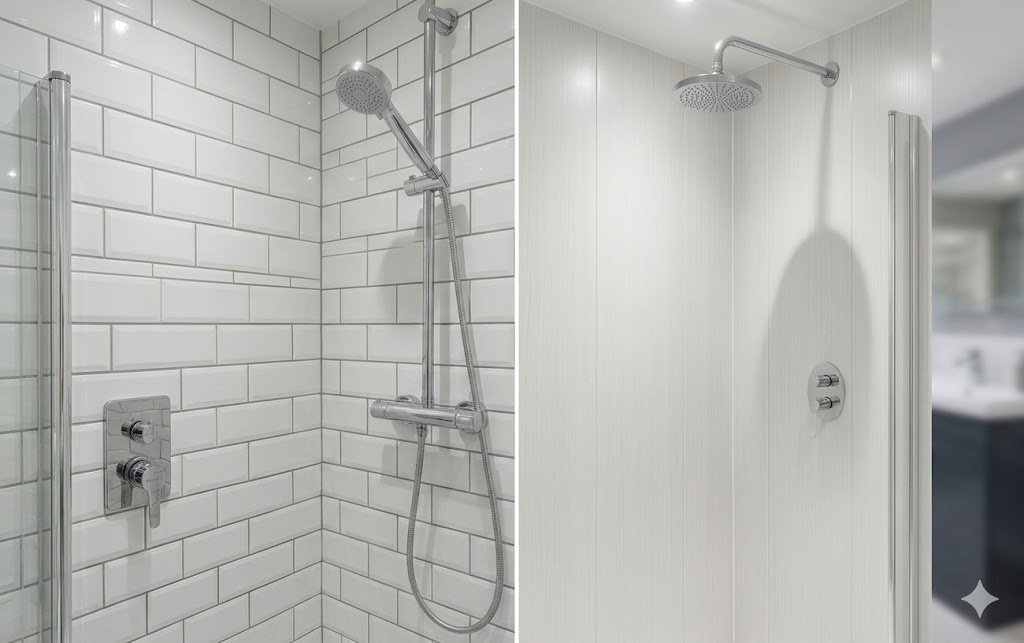
There is a question that comes up in almost every bathroom renovation conversation at some point, and it tends to be asked in hushed tones, as though the person asking already suspects they might be about to say something controversial.
Should I tile it, or go with shower panels?
For years, tiles were the unquestioned default. Nobody got interrogated for choosing tiles. It was just what you did. Shower panels, meanwhile, occupied a defensive position in the conversation, always explained, always justified, always compared against the assumed baseline of tiling.
That dynamic has changed significantly. The quality of modern shower wall panels has moved far beyond what most people’s mental image of bathroom panels looks like, and a growing number of UK homeowners, designers and bathroom fitters are choosing panels not as a compromise but as a deliberate, considered first choice.
So which actually is better? The honest answer is that it depends on what you are optimising for. Here is a clear look at both options across the factors that actually matter.
What Are Shower Panels, Exactly?

Before the comparison, a quick clarification, because the term covers a broader category than many people realise.
Shower panels are large-format waterproof boards designed to cover bathroom walls as a grout-free alternative to tiles. They are available in several core material types: PVC, acrylic, MDF-core laminate, plywood-core laminate and solid-core compact laminate, each with different performance characteristics, price points and best-use scenarios.
The standard format is a full-height sheet, typically 2400mm tall by 600mm to 1200mm wide, covering significant wall area per panel.
Narrower tongue-and-groove strip formats are also available. Most quality panels are 8mm to 11mm thick, though some acrylic options are thinner at 4mm.
The leading panel brands in the UK, including Multipanel, Fibo, Showerwall and Wetwall, offer design ranges that now include convincing marble effects, stone textures, concrete finishes, tile-effect surfaces and decorative prints that represent a genuine step change from the plain white PVC cladding that gave the category its old reputation.
With that context established, here is how panels and tiles actually compare.
Installation: Panels Win, and It Is Not Close
This is the area where the difference between shower panels and tiles is most significant, and most consistently underestimated by homeowners planning their first renovation.
A standard shower enclosure tiled by a professional typically takes between three and five days from start to finish. That accounts for surface preparation, adhesive application, tile cutting and fixing, grout application, grout sealing and full cure time before the shower can be used. The disruption extends across the best part of a working week. If you are living in the house during renovation, that is a meaningful inconvenience.
The same shower enclosure panelled, using a quality laminate or acrylic panel from a reputable manufacturer, typically takes one day. Sometimes less. Surface preparation is simpler, adhesive cure times are shorter, and there is no grouting stage at all. For most standard installations, a competent DIYer can complete the job without professional help, which reduces labour costs significantly and gives you control over timing in a way that booking a professional tiler rarely does.
One further installation advantage that tiles cannot match: PVC panels can be fitted over existing tiles, meaning you will not have to pay to get them taken down or for walls to be repaired. This makes panels ideal if you are looking for a refresh and are on a budget. This single factor regularly saves homeowners a full day of removal work and several hundred pounds of associated labour and disposal costs.
Verdict: Panels are faster, simpler and more accessible for DIY installation.
Cost: How Do Shower Panels Compare to Tiles in the UK?
Cost is where the conversation gets more nuanced, because both options have wide price ranges depending on the quality level you choose.
Tiles: Ceramic tiles sit at the more accessible end of the tile market, while premium options including large-format porcelain, natural stone and handmade ceramic sit considerably higher. When you factor in the materials needed to cover a standard bathroom’s wall and floor area, the total spend on tiles alone adds up quickly before a single hour of tiling labour has been accounted for. And tiling labour is not cheap. A professional tiler working on a full bathroom installation typically takes three to four days to complete the job, and that time is reflected in the final quote.
Shower panels: Quality branded panels from manufacturers like Multipanel, Fibo and Wetwall are available across a range of price points, with the most accessible options already sitting comfortably below the equivalent tile cost for the same wall area. A full shower enclosure typically requires between three and six panels depending on wall widths, and the total material spend tends to compare favourably against a tiled installation of equivalent coverage.
The labour comparison is where panels build their strongest financial case. Wall panels cut installation time in half compared to a full-height tiled installation, sometimes more. That saving on professional labour alone is meaningful, and for homeowners confident enough to approach the job themselves, it represents a significant portion of the overall renovation budget.
For anyone working within a defined budget, panels consistently deliver more visible design quality per pound spent. The money saved on installation time can be reinvested directly into a better panel range, a stronger shower valve, or simply kept in your pocket.
Verdict: Panels are generally more cost-effective when the total project cost, materials plus installation, is calculated honestly.
Waterproofing: Which Actually Keeps Water Out?
Both tiles and quality shower panels are waterproof, but they achieve waterproofing differently, and that difference matters in practice.
Tiles are inherently waterproof as an individual material. The challenge is the grout between them. Grout is porous, and even sealed grout will gradually absorb moisture, discolour and crack with repeated thermal expansion and contraction. In a shower used daily, the grout is under constant stress, and over time even well-applied grout will fail. When grout fails, water gets behind the tiles. When water gets behind the tiles, the problems become significantly more difficult and expensive to resolve than the original grouting job ever was.
Quality shower panels solve this at the construction level. A large-format panel covers wall area with no grout lines. Fewer joints means fewer potential points of water ingress. The joints that do exist between panels are sealed using either tongue-and-groove systems or silicone sealant applied to the manufacturer’s specification. When installed correctly, a quality panel installation is continuously and reliably waterproof in a way that grouted tiles rarely maintain over a decade of daily use.
Which shower panel brands offer the best waterproof guarantees?
This is one of the most common questions from buyers researching panels, and the answer reveals which brands stand behind their products most confidently.
Multipanel backs their panels with a 30-year guarantee and their Hydrolock tongue-and-groove joint system creates a watertight connection between panels without requiring separate joining profiles.
Fibo offers a 25-year guarantee across their full range. Their birch plywood core is more dimensionally stable in humid conditions than MDF alternatives, which is an important technical distinction in a persistently wet environment.
Showerwall provides a 30-year guarantee subject to correct installation and product registration within 28 days of fitting.
Wetwall backs their Elite Compact range with a comprehensive guarantee suited to wetroom and high-moisture installations where standard laminate falls short.
Maintenance: The Honest Day-to-Day Reality
Ask anyone who has owned a tiled bathroom for more than three years what maintenance looks like, and the grout conversation follows quickly.
Grout discolours. In hard water areas, which covers significant parts of the North of England, the Midlands and beyond, limescale accumulates in grout lines and resists standard cleaning products. Mould establishes itself in grout lines in bathrooms with less than perfect ventilation. Periodic resealing is not optional if you want to maintain the waterproof integrity of the installation. It is a requirement that most homeowners systematically underestimate when tiles are first specified.
Shower panels require none of that. The surface is smooth, non-porous and wipes clean with warm water and a soft cloth. There is no grout to scrub, no sealing schedule to maintain, and no progressive deterioration of the wall surface that requires intervention. In a busy family bathroom being used multiple times daily, the cumulative time saved on maintenance over five to ten years is genuinely significant.
Are shower panels easier to maintain than traditional bathroom tiles?
Yes, consistently and substantially. For anyone who values their time, or who knows from experience that bathroom tile maintenance is one of the more tedious recurring domestic tasks, this is one of the most practically significant advantages panels offer.
Where to Buy High-Quality Shower Panels for a Bathroom Renovation
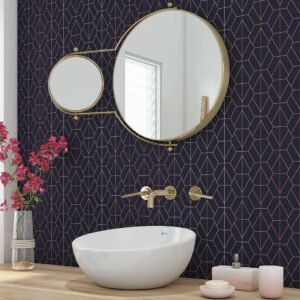
This is where the purchasing decision becomes practical, and where choosing the right supplier makes a genuine difference.
For buyers researching affordable shower panels online, the important distinction is between specialist bathroom panel retailers and general DIY chains. Specialist suppliers typically offer a wider range of brands, better technical knowledge about which panels suit which applications, and access to the matching trims, profiles and accessories that are essential for a clean, watertight installation.
The full range of panels from Multipanel, Fibo, Showerwall and Wetwall, alongside other leading brands including Selkie, Splashbax and Perform Panel, are available to browse and order at showerboard.co.uk/shower-panels-board/, with free UK delivery available on orders over £799.
If you are in the North East, visiting a physical showroom before ordering is well worth the trip. Being able to handle panels in person, compare thicknesses and surface finishes side by side, and see how different designs look in real light conditions makes for a significantly more confident purchasing decision than buying from screen images alone.
So, Shower Panels or Tiles?
Here is the straightforward version of an answer that is usually given too much qualification.
Choose tiles if your renovation is high-specification, material quality is the central brief, you are working with a premium budget and the surface itself is part of the design story, such as natural stone, zellige or handmade ceramic.
Choose shower panels if you are renovating a family bathroom, en-suite or rental property; you want a genuinely low-maintenance surface; you are working to a defined budget; you want the renovation done quickly with minimum disruption; or you simply find the combination of design quality, waterproofing performance and ease of installation that quality panels offer more compelling than the traditional tiling proposition.
For the majority of UK bathroom renovation projects, the case for shower panels is now genuinely strong enough to be the starting point of the conversation rather than the fallback position.
The honest truth is that quality bathroom wall panels with 25 to 30-year guarantees, convincing design ranges and no grout maintenance are not a second choice to tiles. They are a different choice, and increasingly, the smarter one.