
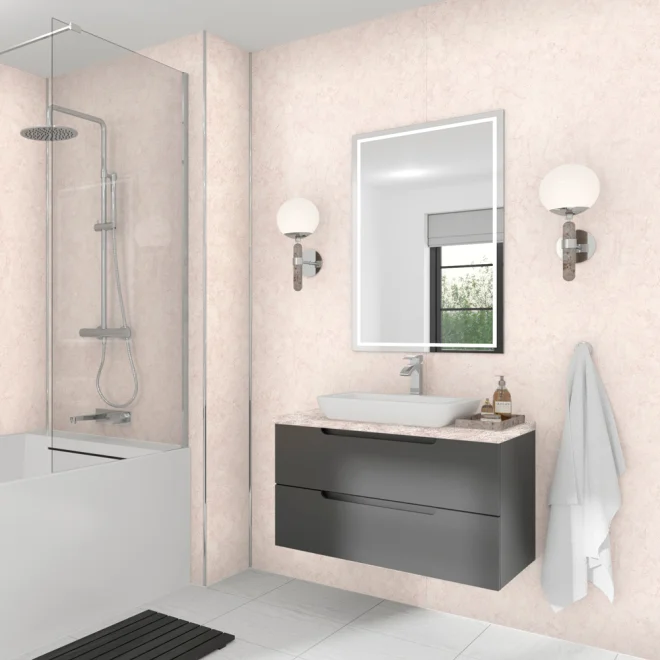
Grout doesn’t age well. Within a year or two it dulls, stains, and starts growing mould no amount of scrubbing seems to shift. It’s the single biggest complaint about tiled bathrooms, and it’s the exact problem a showerboard is designed to solve.
A shower board is a waterproof wall panel that replaces tiles entirely, fitting directly onto your bathroom wall in large, grout-free sheets. It’s faster to install, easier to keep clean, and available in far more finishes than most people realise.
This guide covers what a showerboard actually is, the five real benefits worth knowing before you buy, and how to pick the right one for your bathroom.
What is a Shower Board?
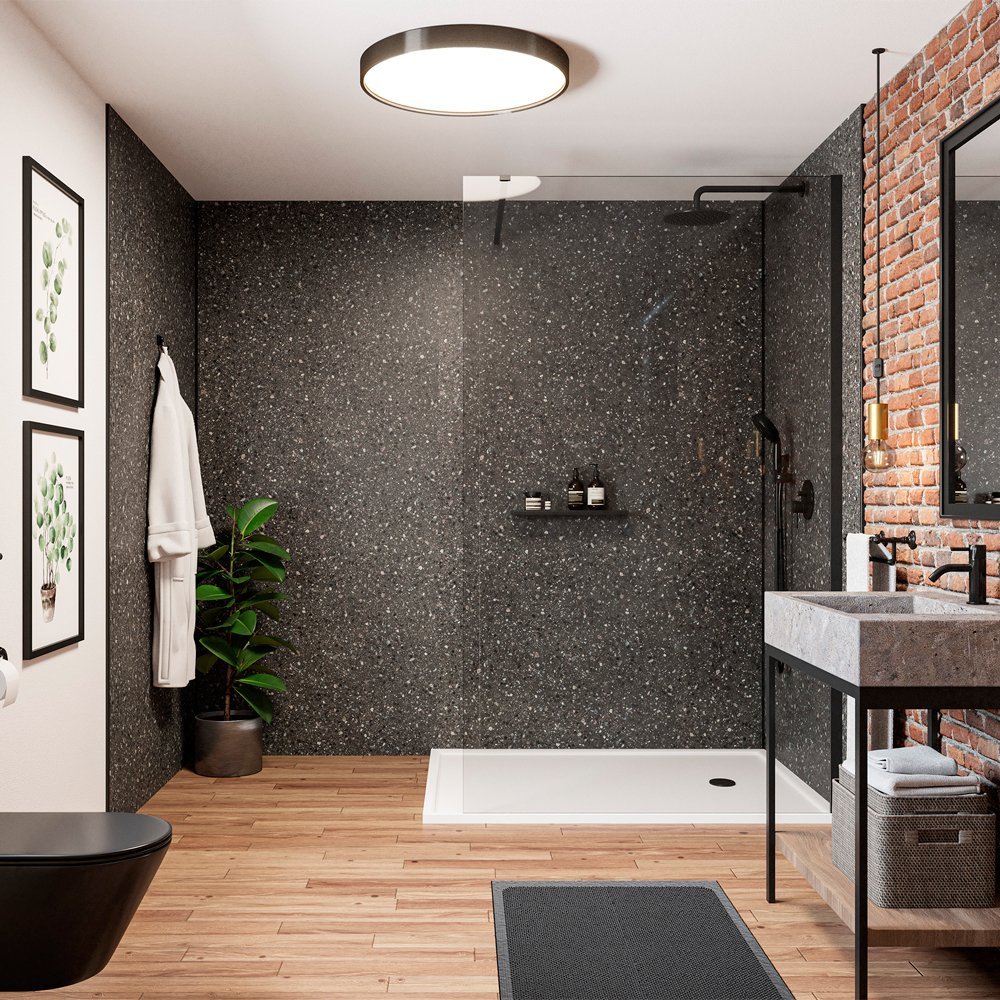
A shower board is a large, rigid wall panel used to cover bathroom and shower walls instead of individual ceramic tiles. Panels typically come in sheets around 2400mm tall, cut to width on site, and are fixed directly to the wall with adhesive.
The core material varies. Some panels use PVC, some use acrylic, and others use an exterior-grade MDF or plywood core finished with a high-pressure laminate. What they all share is a single, sealed surface with no grout lines for water or grime to sit in.
Most homeowners still call the product “showerboard” regardless of which material it’s actually made from, in the same way most people say “hoover” for any vacuum cleaner. It’s become the catch-all term for grout-free bathroom wall panelling.
Why Consider Using a Shower board?
Tiles have been the default bathroom wall finish for decades, largely out of habit rather than because they’re the best option. Showerboards solve several tile problems at once: no grout to stain or regrout, faster fitting, and a warmer surface underfoot and to the touch.
They’re also considerably more forgiving to install than tiles, which matters if you’re taking this on as a weekend project rather than booking a tiler for a week. The five benefits below cover why so many UK bathrooms have made the switch.
Benefit 1: Water Resistance
Material Overview
Every genuine showerboard is fully waterproof, not just water-resistant, which is the key difference from tiles. Tiles themselves don’t leak, but the grout between them does, letting moisture track through to the wall behind over time.
PVC and acrylic panels are solid, sealed sheets. There’s no joint for water to find unless you install them badly, and even then, a properly sealed trim closes that gap completely. Laminate MDF-core panels achieve the same result with a high-pressure laminate skin bonded over a moisture-resistant core.
How 6mm Showerboard Enhances Protection
A 6mm showerboard is one of the most common thicknesses used in UK wet rooms and shower enclosures, and it earns that popularity for a reason. At 6mm, the panel is thick enough to stay rigid on the wall without bowing, but thin enough to fit over existing tiles without eating into room space.
The thickness also matters for trims. Aluminium edge and corner trims are manufactured to match standard panel thicknesses, and 6mm is one of the most widely stocked sizes, which makes sourcing matching trims and end caps straightforward rather than a hunt for a rare fitting.
Benefit 2: Easy Installation
Step-by-Step Guide
Shower boards are built to be DIY-friendly, and the process follows the same broad steps regardless of which material you choose:
- Prepare the wall. It needs to be flat, dry and structurally sound. Panels can often go directly over existing tiles if they’re secure and flat.
- Measure and cut. Panels are supplied oversized and trimmed to the exact height and width of your wall.
- Apply adhesive. A wet room adhesive or panel adhesive is applied to the back of the panel or directly to the wall, depending on the manufacturer’s instructions.
- Fit the panel. Press firmly into place, working from one edge across to avoid trapping air bubbles.
- Fit trims. Aluminium or PVC trims finish internal corners, external corners and edges, and seal the joints against water.
- Seal the edges. A silicone sealant finishes the joint where the panel meets the bath, shower tray or floor.
Most straightforward single-wall installations can be completed in a day. A full shower enclosure with multiple panels and trims is more realistically a weekend job for a confident DIYer.
Comparing Showerboards with Traditional Materials
The time saving is the standout difference. A tiler working around fiddly cuts, spacers and grouting simply can’t match the speed of a handful of large panels going up in one piece.
Benefit 3: Aesthetic Appeal
Range of Designs
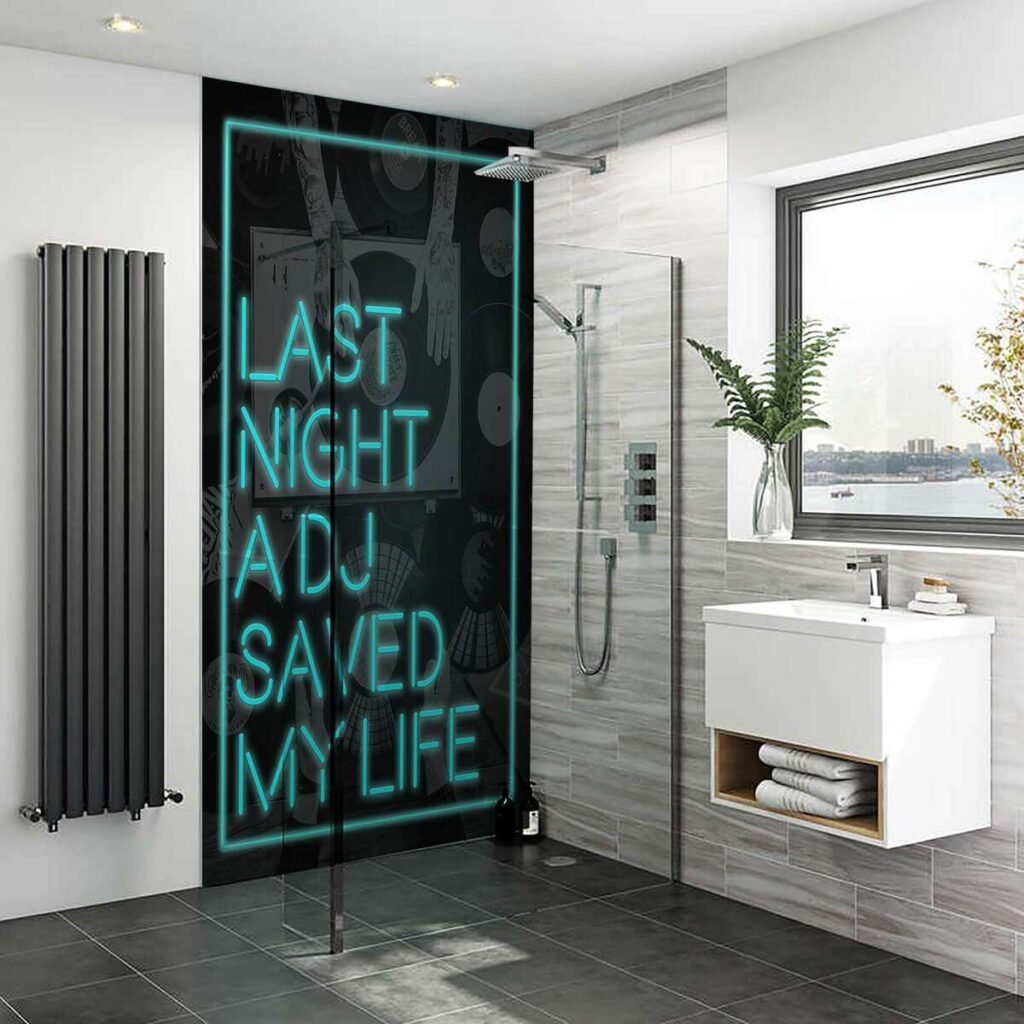
The idea that showerboards look cheap or plasticky is well out of date. Current ranges include marble effect, concrete effect, stone effect, wood effect, and high-gloss and matte finishes, alongside on-trend fluted and textured panel designs.
Marble and stone effect panels have become particularly popular because they deliver the high-end look of natural stone at a fraction of the cost and weight, with none of the sealing and staining concerns real stone brings into a wet environment.
Incorporating Aluminium Showerboard Trims
Trims aren’t just functional. Aluminium trims are available in chrome, brushed brass, matte black and satin finishes, which means the trim itself becomes a styling decision rather than an afterthought.
A brushed brass trim against a warm marble-effect panel reads as a considered, high-end finish. A matte black trim against a pale grey stone effect gives a sharper, more contemporary edge. Choosing the trim finish alongside the panel, rather than defaulting to whatever’s cheapest, makes a noticeable difference to the finished look.
Benefit 4: Durability
Longevity of Shower boards
A well-installed showerboard is built to last well over a decade in daily use. PVC and acrylic panels resist swelling, cracking and fading, and laminate MDF-core panels use an exterior-grade core specifically to withstand the humidity of a bathroom environment.
Unlike grout, which visibly ages within a couple of years regardless of how well it’s cleaned, a sealed panel surface doesn’t have a porous joint to deteriorate. The panel you fit looks close to the panel you’ll still have a decade later.
Maintenance Tips
Keeping a showerboard looking new takes very little effort:
- Wipe down with a damp cloth and mild detergent after use, especially around the shower area
- Avoid abrasive scourers, which can dull a gloss finish over time
- Check silicone sealant at joints annually and reseal if it starts to lift
- Dry the panel surface after showering where possible to prevent limescale build-up in hard water areas
Benefit 5: Cost-Effectiveness
Initial Investment vs. Long-Term Savings
Showerboard panels vary in price depending on material. As a rough UK guide:
- PVC panels: roughly £15–£40 per panel, the most budget-friendly option
- Acrylic panels: roughly £40–£100 per panel, with a higher-gloss, more premium finish
- Laminate MDF-core panels: roughly £60–£150 per panel, typically the most tile-like in appearance and feel
On the surface, budget tiles can look cheaper per square metre. But the total cost of a tiled bathroom includes grout, spacers, adhesive, sealant, and very often professional labour for several days’ work. Factor in installation time and the ongoing cost of regrouting every few years, and showerboards frequently work out cheaper over the life of the bathroom, not just at the checkout.
Are Showerboards Any Good? Customer Testimonials
Feedback on showerboard-style panels tends to cluster around the same few points, echoed across verified reviews on UK bathroom retail sites:
“Installation was far quicker than I expected. No grouting, no mess, done in a weekend.”
“The marble effect finish looks far more expensive than what I paid. Visitors assume it’s real stone.”
“Cleaning takes minutes now. I used to dread scrubbing the grout every few weeks.”
The most consistent praise is for the time saved, both during installation and on ongoing cleaning, with the finish quality of modern marble and stone-effect designs coming a close second.
Conclusion
Recap of Benefits
A showerboard delivers on five fronts that matter in a real bathroom: full water resistance without grout, a DIY-friendly installation, a genuinely wide range of finishes, long-term durability, and a total cost that often beats tiles once installation and maintenance are factored in.
Final Thoughts on Choosing Shower Boards
The right choice comes down to your bathroom’s needs rather than a single “best” material. A budget PVC panel suits a rental or a simple refresh. A laminate MDF-core panel with a stone or marble effect suits a bathroom you want to look considered for years to come.
Whichever direction you lean, ordering a sample before you commit is worth the small cost. Colours read differently under bathroom lighting than they do on a screen.
Ready to see the options? Browse our full range of shower wall panels or order a sample to check the finish against your bathroom before you buy.