
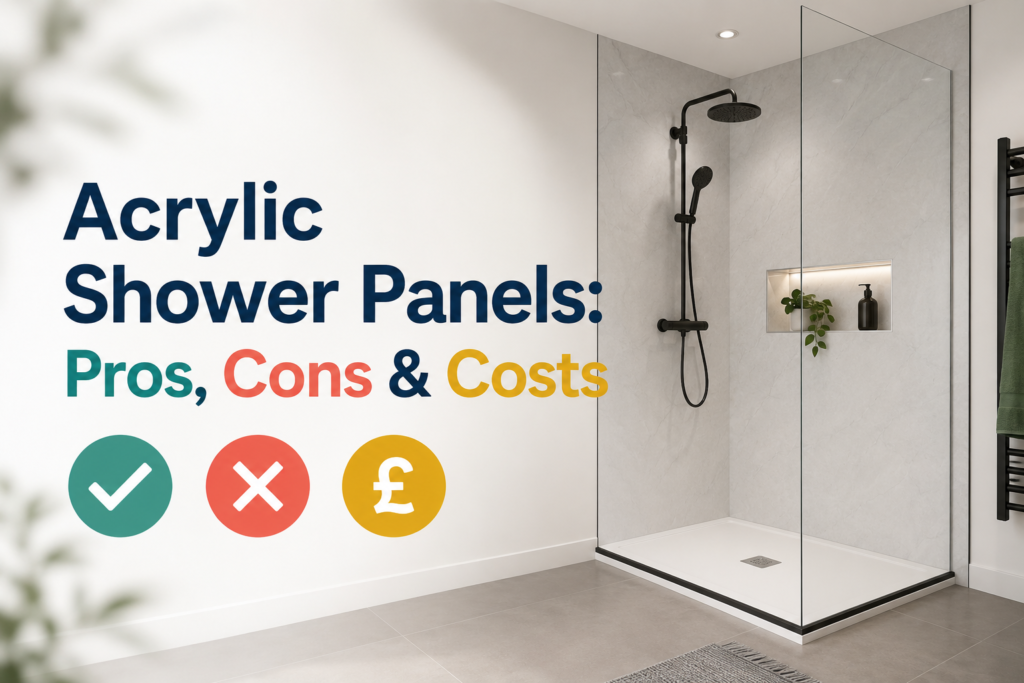
Tiles had their moment. But more UK homeowners are now choosing acrylic shower panels, and once you’ve lived without grout, you rarely want to go back. No re-sealing, no black mould between the lines, no weekend spent on your knees scrubbing. Just clean, waterproof walls that hold their finish for years.
This guide tells you exactly what acrylic shower panels are, what they cost right now, where they genuinely shine, and where they have limits. Everything you need to make a confident decision.
What Acrylic Shower Panels Actually Are
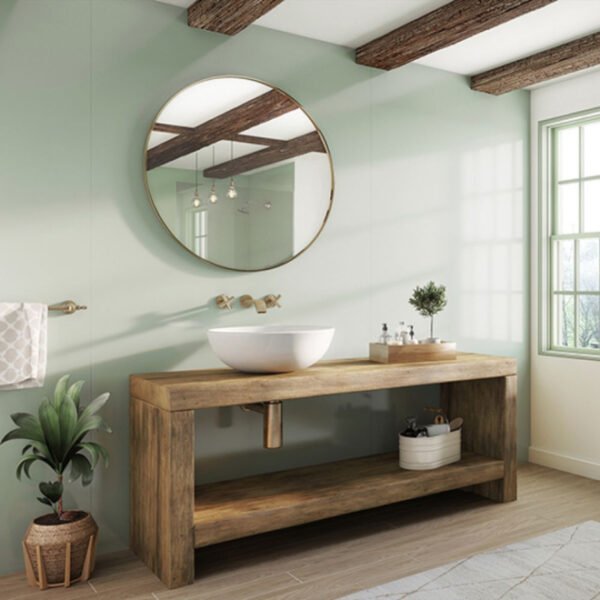
Acrylic shower panels are solid thermoplastic sheets fixed directly to your shower walls, typically using a purpose-made adhesive. Unlike tiles, they span full wall height, usually 2400mm and join at the edges with matching trim profiles, creating a seamless, grout-free surface.
The material is non-porous throughout. Water has nowhere to penetrate, which is why acrylic shower walls consistently outlast tiled equivalents where grout failure is the most common cause of behind-wall water damage.
There are two types worth knowing:
Plain or solid-colour acrylic: uniform colour throughout the sheet, typically used in contemporary bathrooms where a clean, tonal finish is the goal.
Rear-printed acrylic: a design or photographic image printed on the reverse face of the panel, viewed through the clear acrylic top layer. This gives the colour a depth and glass-like quality that printed laminates cannot replicate. The Splashbax Acrylic Collection and the Showerwall Acrylic range both use this process, the result looks closer to backlit glass than to a printed sheet.
The Real Advantages of Acrylic Shower Walls
Waterproof by nature, not by treatment
Acrylic is a solid thermoplastic. It doesn’t have a wood core, a foam layer, or grout lines, all the routes by which water eventually gets behind traditional wall finishes. A correctly installed acrylic shower wall is as close to genuinely waterproof as a bathroom wall covering gets.
High-gloss finish that works in darker bathrooms
The mirror-like surface of a gloss acrylic panel bounces light across a room. If your bathroom is north-facing, lacks a window, or feels smaller than you’d like, acrylic shower walls do more work than any light fitting to change that perception. Matte tiles and textured laminates absorb light; acrylic reflects it.
No grout and everything that removes
Grout in a UK bathroom, especially in hard water areas across the Midlands, Yorkshire, and the South East, discolours within months and harbours mould within a year. Removing grout from your bathroom doesn’t just cut cleaning time, it removes the primary route for moisture to reach the wall behind. With acrylic shower panels, there is simply nothing to clean except the smooth surface itself.
Cuttable and DIY-friendly
Acrylic panels can be cut to size on-site using a fine-tooth saw or jigsaw. You don’t need specialist tools or a professional tiler. Most three-wall shower installs are achievable in a day for a competent DIYer, which makes a meaningful difference to the total cost of a bathroom renovation.
Durability above PVC
Acrylic sits above hollow-core PVC in durability. It’s denser, more rigid, and on premium grades, finished with a scratch-resistant coating. It won’t shatter if knocked, won’t warp under heat, and doesn’t yellow over time the way some PVC panels do.
10-year guarantees as standard
The Splashbax Acrylic panels at Shower Board carry a 10-year guarantee. At that price point, that’s the kind of assurance that makes a premium material genuinely worth the investment.
Where Acrylic Shower Panels Have Limits
Higher per-panel cost than PVC or laminate
This is the honest trade-off. Acrylic panels cost more upfront than PVC alternatives. If cost is the only variable and finish quality is secondary, PVC wins on price. Acrylic wins on everything else.
Heavier to handle during installation
Solid acrylic is denser than PVC. For a solo DIY install, you’ll likely want a second pair of hands to hold panels in position while the adhesive cures. It’s not a dealbreaker, it’s just sensible planning.
Susceptible to scratching if cleaned incorrectly
This catches some buyers out. Abrasive cleaning pads, scouring powders, or bleach-based sprays will damage the surface finish over time. Acrylic shower walls need nothing more than a soft cloth and a mild non-abrasive cleaner. Use the right products and the surface stays pristine for years; use the wrong ones and you’ll see the damage quickly.
Individual panels can’t be spot-repaired
With tiles, a chipped tile can be replaced individually. If an acrylic shower panel suffers significant damage, the whole panel typically needs replacing. It’s a case for buying quality upfront rather than going budget and replacing sooner.
Acrylic Shower Panel Prices at Shower Board
These are actual prices from the Shower Board website, verified at time of writing, covering the two primary acrylic ranges.
Splashbax Acrylic Collection
Splashbax is Shower Board’s most distinctive acrylic range, bold, photographic designs on a 3mm gloss acrylic base, available in 800mm, 900mm, and 1200mm widths at 2440mm height. Each panel carries a 10-year guarantee.
| Width | Price Range (per panel) |
| 800mm | £540 – £670 |
| 900mm | £540 – £670 |
| 1200mm | £540 – £670 |
Prices vary by design. Sale pricing is frequently available. Browse the Splashbax Acrylic Collection.
Showerwall Acrylic Collection
Showerwall’s acrylic panels are rear-printed 4mm sheets with a polished glass-like finish. Available in 896mm and 1200mm widths at 2400mm height, they cover both bold colour statements and softer pastel finishes.
| Width | Price Range (per panel) |
| 896mm | From approx. £300 |
| 1200mm | From approx. £440 |
Browse the Showerwall Acrylic range.
What to Budget Beyond the Panels
For a standard three-wall shower enclosure you’ll also need trims (internal corners, external corners, end caps) and adhesive. Budget approximately £50–£100 for accessories on a typical install. Samples are available from Shower Board at £5 each, always worth ordering before committing to a full panel purchase, as colours render differently under artificial light than on screen.
Acrylic vs PVC vs Laminate: Choosing the Right Panel Material
Understanding where acrylic fits in the wider market helps you spend the right amount for your project.
Acrylic shower panels are the premium choice for finish quality and light reflection. The glass-like surface is unmatched by any other panel type. They suit main bathrooms, en suites, and anyone who wants a feature wall that genuinely stands out. Higher cost, excellent longevity.
PVC panels are the budget option, lighter, cheaper, and easier for solo DIY installation. The finish quality is noticeably lower, and cheaper grades can yellow or warp over time. Suited to rental properties or secondary bathrooms where appearance is secondary.
Laminate (HPL) panels sit between the two. They’re more rigid than acrylic of equivalent thickness, making them better suited to large wetroom installations. The surface texture mimics natural stone and wood more convincingly than acrylic, but without acrylic’s reflective quality. Brands like Multipanel and Selkie at Shower Board represent this category.
For most UK homeowners renovating a family bathroom or en suite, acrylic wall panels offer the most visible upgrade per pound spent on materials. The finish quality genuinely changes how a bathroom feels, not just how it looks.
Installing Acrylic Shower Panels: What to Know Before You Start
Acrylic panels bond to the wall using a purpose-made adhesive, never standard construction adhesive, which can damage the panel or void the guarantee. Joints are sealed with a compatible silicone.
Key preparation points:
- The wall surface must be flat, clean, dry, and structurally sound. Acrylic panels can go over existing tiles if those tiles are firmly bonded and the wall surface is level which saves significant prep time and mess compared to hacking off and replastering.
- Always peel back the protective film on the decorative face to inspect for defects before installation. Once panels are cut or installed, they’re considered accepted defect claims after cutting aren’t covered under guarantee.
- Store panels flat and indoors until installation. Leaning them against a wall for extended periods causes bowing.
How to Choose the Right Acrylic Shower Panel for Your Bathroom
Design first, width second. Splashbax and Showerwall acrylic ranges are available in multiple widths. Choose the design you want, then work out how many panels your shower enclosure needs based on wall measurement. Standard three-wall enclosures typically require three to four panels depending on width.
Order a sample before ordering panels. Acrylic colours and prints look different under artificial bathroom lighting versus natural light and on-screen. A sample removes that uncertainty entirely.
Match your trims at the same time. The most common DIY installation error is ordering panels without the full complement of trim profiles. Internal corners, external corners, and end caps all need to be ordered alongside the panels, retrofitting different trims later affects the finished appearance.
Check the guarantee terms. Acrylic panels require specific adhesives and sealants to maintain the guarantee. Using non-specified products voids the warranty.
Browse Acrylic Shower Panels at Shower Board
Shower Board’s full acrylic offering sits across more than these two distinct ranges, the bold, high-impact Splashbax Acrylic Collection and the Showerwall Acrylic range, alongside laminate, HPL, and PVC alternatives from Multipanel, Wetwall, Selkie, and more. Everything is available through the Shower Panels category, with samples available to order and a showroom in Darlington if you’d prefer to see the panels in person before buying.