
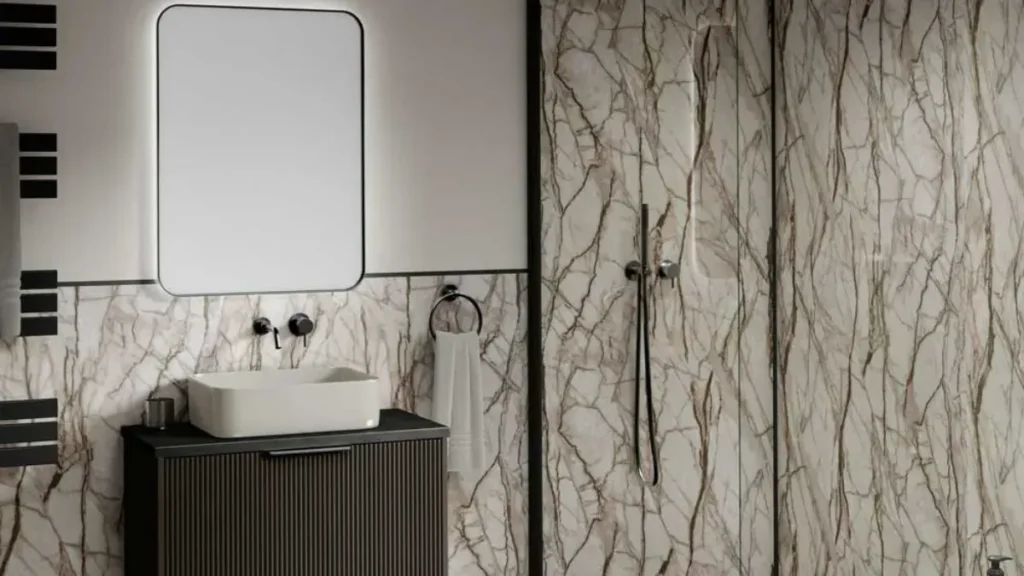
If you have been researching bathroom renovation options recently, the chances are PVC shower panels have come up more than once. And if you are still sitting on the fence about whether they are worth considering — or quietly worried that they are just a cheaper compromise rather than a genuine choice — this guide is for you.
PVC shower panels have had something of a transformation in perception over the last few years. What was once considered the budget-only option has matured into a product category that serious UK homeowners, landlords and bathroom fitters are choosing deliberately — not because they cannot afford anything else, but because PVC panels genuinely make sense for a wide range of bathrooms and renovation projects.
Let us break down everything worth knowing — what PVC panels actually are, why so many people are switching from tiles, the practical questions people ask most, and five PVC shower panels available at Shower Board that are worth looking at for your project.
What Are PVC Shower Panels?
PVC shower panels — also referred to as PVC bathroom cladding, PVC wall boards or sometimes just shower boards — are large-format waterproof wall panels made from polyvinyl chloride. They are designed to cover bathroom walls, shower enclosures and wet room areas as a fully waterproof, grout-free alternative to traditional ceramic or porcelain tiles.
The structure of a quality PVC shower panel is worth understanding because it explains why they perform so well in bathroom environments. Unlike thin decorative PVC strips, reinforced PVC shower panels use a rigid construction — often a honeycomb core sandwiched between outer PVC layers — that gives the finished panel genuine structural strength, impact resistance and dimensional stability in high-moisture conditions. The outer surface is non-porous, smooth and easy to wipe clean. There is no grout, no sealant between tiles to break down over time, and no hidden joints for water to penetrate.
Standard UK PVC shower panels are typically supplied in sheets measuring 2400mm tall — covering the full wall height in a single piece — with widths ranging from 250mm narrow strip formats through to the increasingly popular 1000mm wide boards that dramatically reduce visible joints in a finished installation.
Are PVC Shower Panels Any Good?
This is the most commonly searched question around PVC shower panels — and the honest answer is yes, when you choose the right product and install it correctly.
The reputation issue that PVC panels have had historically came from the very cheapest end of the market — thin, flexible sheets with basic surface finishes that did not look particularly convincing and did not hold up particularly well over time. That end of the market still exists, but it represents a small part of a much broader and significantly better product landscape.
Quality reinforced PVC shower panels — particularly the 8mm and 10mm thick boards that represent the mainstream of the UK market today — are genuinely durable, genuinely waterproof and genuinely low maintenance. A bathroom fitted with quality PVC panels will typically look as good in five years as it did on the day of installation, with nothing more than occasional wiping down required to maintain that appearance. That is a claim that tiled bathrooms — particularly in hard water areas across the North East, Yorkshire and the Midlands — simply cannot make with the same confidence.
PVC Shower Panels vs Tiles — The Real Comparison

This comparison comes up constantly in UK bathroom renovation research — and for good reason. Tiles have been the default bathroom wall covering for decades, and switching away from something that familiar requires genuine reasons.
The case for PVC shower panels:
Grout is the single biggest argument. Every tiled bathroom has grout lines, and every tiled bathroom eventually has discoloured, mouldy, difficult-to-clean grout lines — particularly in hard water areas and bathrooms with less than ideal ventilation. PVC panels eliminate grout entirely. The surface is continuous, smooth and non-porous — it does not stain, does not grow mould, and wipes clean in seconds.
Installation speed is another significant factor. A competent DIYer can fit a complete shower enclosure in PVC panels in a single day. The same job in tiles — accounting for surface preparation, adhesive, tile cutting, grouting and full cure time — typically takes five to seven days and most homeowners bring in a professional tiler, which adds meaningful labour cost on top of the tile materials themselves.
PVC panels can also be fitted directly over existing tiles in most situations, provided the existing tiled surface is sound, flat and well-adhered. This alone can save a full day of labour removing old tiles — and a significant amount of debris, dust and disruption in the process.
Where tiles still lead:
The honest caveat is surface quality. Premium large-format porcelain tiles — particularly 1200mm x 600mm or larger formats — have a weight, depth and surface quality that PVC cannot fully replicate. If you run your hand across a quality porcelain tile versus a PVC panel, the material difference is immediate. For high-specification bathrooms where material quality is the central brief, HPL or compact laminate panels — or premium tiles — will often be the better choice.
For the majority of UK bathroom renovation projects, though — family bathrooms, en-suites, rental properties, quick refreshes — PVC delivers a result that is genuinely good, genuinely durable and genuinely easy to live with.
Can PVC Shower Panels Go Over Existing Tiles?
Yes — in most cases PVC shower wall panels can be installed directly over existing tiles without removing them first. The key requirements are that the existing tiles must be solidly fixed to the wall, with no hollow tiles or loose areas, and the surface must be reasonably flat without excessive variation between tiles. Any tiles that are loose, hollow or protruding should be fixed or removed before panels go on top.
The practical point to be aware of when fitting over tiles is the added depth at the wall surface. Each layer of panelling adds a few millimetres to the wall profile, which can occasionally affect the fit of existing fixtures — shower door frames, screen hinges, or items fixed close to the wall. Always account for this additional depth before ordering and starting work.
What Thickness PVC Shower Panels Do I Need?
Thickness is the most important quality indicator when comparing PVC shower panels — and it is where genuinely significant differences between products exist.
5mm or less — Entry-level panels that suit low-demand applications and basic installations. Can flex between fixing points, which affects both appearance and long-term performance in a wet environment.
8mm — The recommended minimum for a quality shower enclosure installation. Provides good rigidity, a solid feel when handling and pressing the panel against the wall, and a noticeably more premium finished result than thinner alternatives. The sweet spot for most UK family bathroom renovations.
10mm — Premium thickness. The extra material adds further structural rigidity, eliminates any flexing, and gives the most substantial and quality feel to the finished installation. Worth considering for main bathrooms and higher-use installations where you want the panel to feel as solid as possible.
When comparing two panels at similar price points, always choose the thicker option. The difference in the finished installation is immediately apparent and the additional rigidity makes a real practical difference over time.
How Long Do PVC Shower Panels Last?
Quality reinforced PVC shower wall panels — 8mm or 10mm boards from reputable manufacturers — typically last 10 to 15 years under normal domestic bathroom use. Several factors affect longevity in practice.
Installation quality is the most significant. Panels that are not properly sealed at joints, edges and internal corners will allow water ingress behind the surface over time — leading to wall damage and, in poorly ventilated bathrooms, mould growth that is far more difficult to deal with than any tile grout ever was. Using the manufacturer’s approved trims and sealants — rather than generic alternatives — and following the installation guidelines carefully is not optional: it is what determines whether a PVC panel installation lasts ten years or develops problems in two.
Maintenance matters too, but in a positive direction. PVC panels are significantly easier to maintain than tiles. Regular wiping with a mild non-abrasive bathroom cleaner keeps the surface looking fresh without any effort. Avoid harsh chemical cleaners and abrasive sponges, which can dull the surface finish over time.
Most quality PVC shower panels carry a manufacturer guarantee — typically 10 years — which is a useful minimum benchmark when comparing products.
5 PVC Shower Panels Worth Considering at Shower Board
Here are five specific PVC shower panel products available at Shower Board — covering different finishes, formats and applications to suit a range of bathroom renovation projects.
1. Megaboard Marble Effect PVC Wall Panel — 1000 x 2400mm

If there is one finish that consistently tops the popularity charts for bathroom wall panels in the UK, it is marble effect — and Megaboard’s marble effect PVC wall panel delivers that look in one of the most practical large-format options available. Measuring a generous 1000mm wide by 2400mm tall, each panel covers a significant wall area in a single sheet — reducing visible joints dramatically compared to narrower 250mm strip formats.
The marble effect surface is photorealistic and convincing in the right lighting conditions, with the kind of veining and tonal variation that makes it read as a genuine premium finish rather than an obvious print. The honeycomb core PVC construction keeps the panel lightweight enough to handle and install without assistance while providing the structural rigidity and impact resistance needed for a busy bathroom environment.
The tongue and groove joining system means panels connect seamlessly along a wall run — no separate joining trim required between boards, which keeps the wall surface cleaner and reduces the amount of sealant work needed at installation. For a standard shower enclosure or full bathroom wall in marble effect, two or three Megaboard panels typically cover the job.
2. Megaboard Tile Effect PVC Wall Panel — 1000 x 2400mm
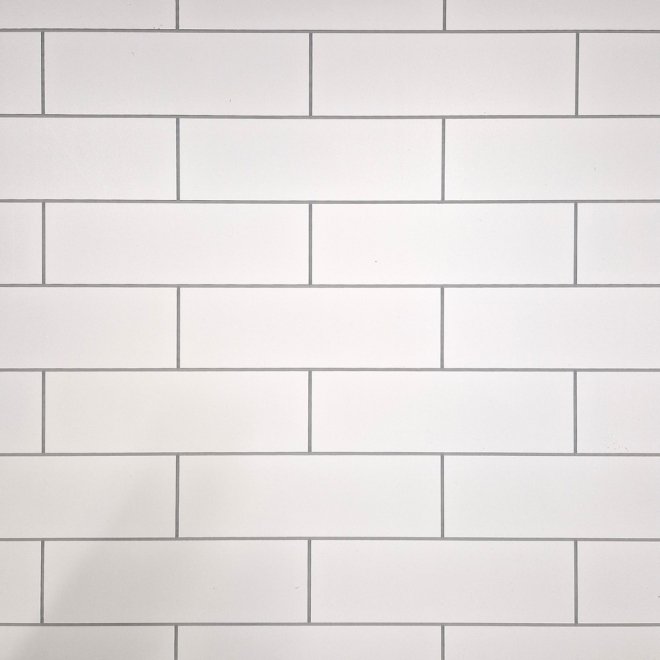
For homeowners who love the look of tiled walls but not the maintenance that comes with them, the Megaboard tile effect PVC panel is an option worth taking seriously. The surface replicates the visual pattern of ceramic or porcelain tiles — complete with simulated grout lines — but without any actual grout whatsoever. The lines are part of the panel surface, not real joints, which means they wipe clean with the same ease as the rest of the panel and never discolour, crack or grow mould.
The 1000mm wide format means a realistic tile-look wall can be achieved with far fewer panels than a conventional tiled installation would require — and without any of the cutting, adhesive or grouting. For landlords and property developers who want the appeal of a tiled bathroom aesthetic with none of the ongoing maintenance demands, this is a particularly attractive option.
Available in a range of tile pattern styles to suit different bathroom aesthetics, the Megaboard tile effect panel connects with the same tongue and groove system as the rest of the Megaboard range — making installation straightforward for both professionals and confident DIY renovators.
3. Megaboard Stone Effect PVC Wall Panel — 1000 x 2400mm
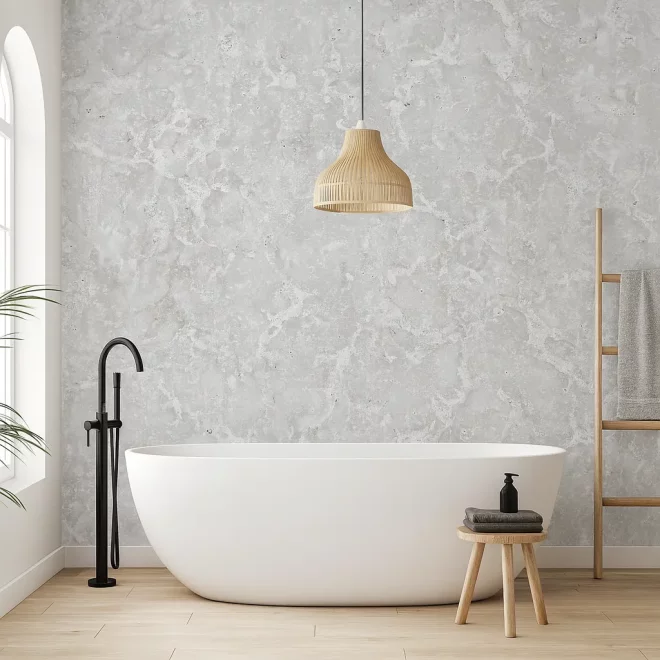
Stone effect bathroom walls have grown significantly in popularity as the broader design trend toward natural, organic materials in interior spaces has gathered momentum — and Megaboard’s stone effect PVC panel taps into that appeal with a surface finish that reads as warm, textured and genuinely considered rather than clinical or flat.
The finish replicates slate and natural stone textures — darker tonal variations, subtle surface depth and the kind of irregular natural patterning that makes stone finishes feel authentic rather than manufactured. In a contemporary bathroom scheme alongside matt black shower hardware or brushed brass fittings, a stone effect Megaboard panel creates an immediately premium-feeling result at a fraction of the cost and effort of a genuinely stone-tiled installation.
The 1000mm wide format and honeycomb PVC construction give the same practical installation benefits as the rest of the Megaboard range — lightweight, easy to handle, tongue and groove joining, and straightforward to cut on site using standard woodworking tools.
4. MB Maxi PVC Wall Board — Marble Effect
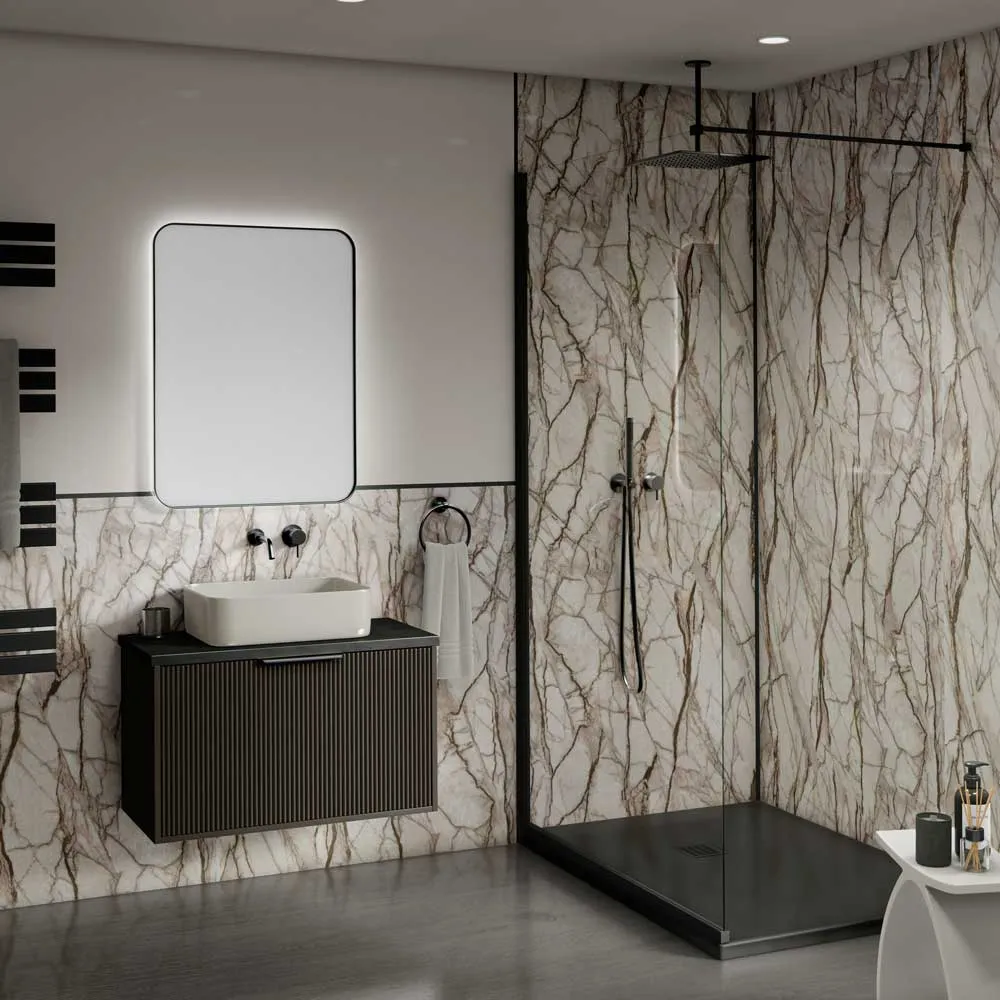
The MB Maxi Collection PVC wall boards bring the large-format panel approach to a range of on-trend decorative finishes — and the marble effect variant is one of the most popular in the range. Like the Megaboard panels, MB Maxi boards are wide-format — covering significant wall area per panel and dramatically reducing the number of visible joints in a finished installation — but the MB range offers its own distinct selection of finishes and tonal variations that give it a different aesthetic character.
MB panels are constructed from PVC throughout and can be installed directly over existing tiles in most cases — saving time, labour and disruption during renovation. The surface is non-porous and easy to clean with nothing more than warm water and a soft cloth, and the range is designed for straightforward installation by both professional bathroom fitters and competent DIY renovators.
For bathrooms where a marble aesthetic is the goal but budget is a real consideration, the MB Maxi marble effect wall board offers a compelling result at an accessible price point — delivering the visual warmth and sophistication of marble-effect walls with the practical low-maintenance benefits that make PVC panels such a popular choice for UK bathroom renovations.
5. MB PVC Decorative Wall Panel — Stone & Textured Effect
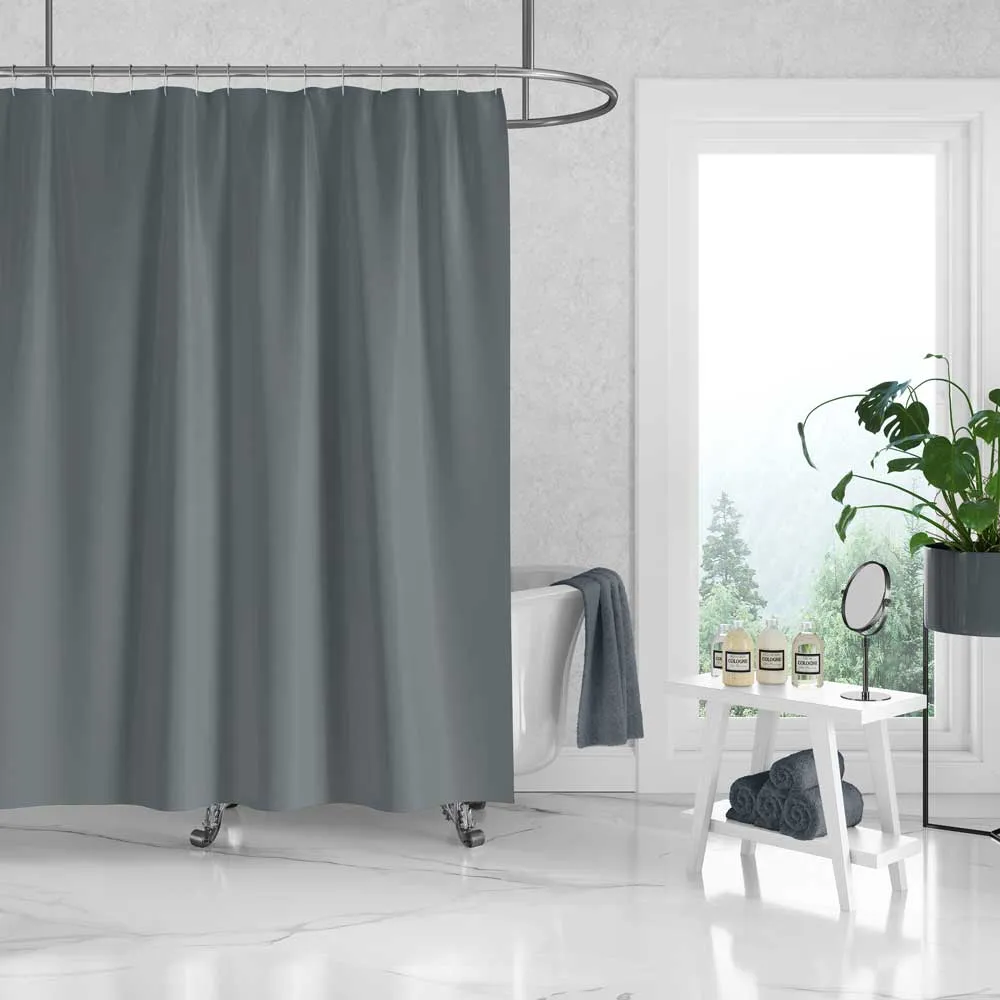
The MB decorative PVC wall panel range extends beyond marble and tile effects into more textured and contemporary surface finishes — including stone-inspired and textured modern designs that suit bathrooms where a bolder, more individual look is the aim. These are the panels for homeowners who want their bathroom walls to make a genuine design statement rather than simply provide a clean, neutral backdrop.
The textured and stone-effect variants in the MB range work particularly well as feature wall treatments — a single wall of MB decorative PVC panel behind a freestanding bath or walk-in shower, contrasting with plain white or neutral panels on the remaining walls, creates a focal point that gives the whole bathroom a considered, designed quality without requiring a complete renovation overhaul.
Constructed from PVC throughout, MB decorative panels share the same practical installation advantages as the wider MB range — direct fitting over tiles, no grout required, easy wipe-clean maintenance, and a product that is designed to perform reliably in the humid conditions of a UK bathroom environment for years without deterioration or discolouration.
Installing PVC Shower Panels — The Key Things to Get Right
PVC shower panels are genuinely DIY-friendly — they are lighter and easier to handle than MDF-core or plywood-core panels, can be cut with standard woodworking tools, and fix to the wall using a quality waterproof grab adhesive. For most standard shower enclosure installations, a competent DIYer can complete the job in a day.
The area that matters most — and where most installation problems originate — is sealing. Every joint, every edge, every internal corner and every point where the panel meets another surface needs to be sealed correctly using either the manufacturer’s matching trims and profiles or a quality silicone sealant applied cleanly and thoroughly. Water that finds its way behind PVC panels through poorly sealed edges will damage the wall behind and, in a badly ventilated bathroom, can cause mould growth that is far more troublesome than anything a tiled bathroom ever produced.
Always use the trim accessories and sealant products recommended by the panel manufacturer for your specific product — generic alternatives may fit but are not guaranteed to perform the same way, and using them can affect the product warranty.
The Bottom Line on PVC Shower Panels
For most UK bathroom renovation projects — family bathrooms, en-suites, rental properties, quick refreshes on a budget, or any project where ease of installation and long-term low maintenance are genuine priorities — PVC shower panels make a strong, practical, intelligent choice.
They are not the right answer for every bathroom. If your project demands the absolute highest material quality and tactile premium feel, moving up to HPL or compact laminate panels is worth the additional investment. But for the majority of real-world UK renovation projects, quality PVC panels from a reputable manufacturer give a result that is genuinely good, genuinely durable and genuinely easy to live with day after day.