
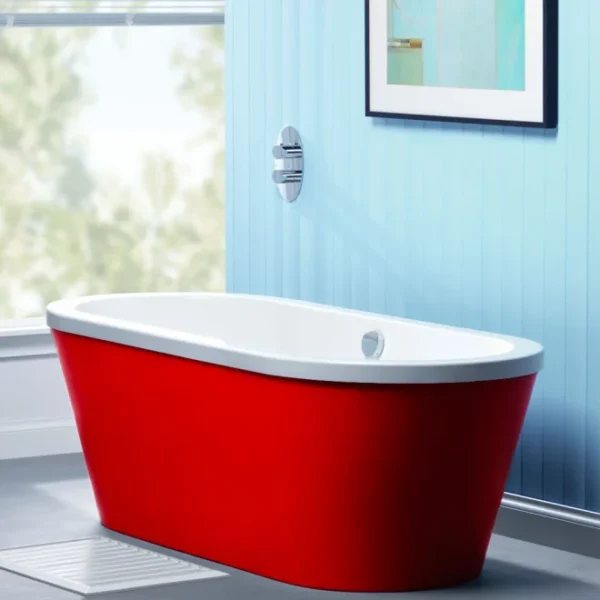
There is something about a freestanding bath that no other bathroom fixture quite manages to replicate. It sits in the room like a piece of furniture rather than a fixture — confident, unhurried, and quietly magnificent. If you have ever walked into a hotel bathroom and found yourself staring at a beautiful standalone tub wondering why your bathroom at home looks nothing like that, you are not alone. The good news is that a freestanding bath is far more achievable in a real UK home than most people initially think.
Whether you are working with a generous master bathroom or a genuinely compact space, there is almost certainly a freestanding bath that works for your room. Let us walk through everything worth knowing — from size and shape to styles, configurations, and how to make them work with a shower too.
First Things First — What Makes a Freestanding Bath Different?
Unlike a built-in bath that sits between walls or inside a panel frame, a freestanding bath is a completely self-contained unit — finished on all sides, standing independently on the floor, and requiring no surrounding structure to look complete. The waste and taps connect underneath or through the bath itself, and the result is something that reads less like bathroom infrastructure and more like a design statement.
That distinction matters because it changes how you think about positioning. A standard built-in bath goes against a wall almost by definition. A freestanding bath can go almost anywhere — against a wall, in the centre of the room, in a corner, or underneath a window. That flexibility is one of the things that makes them so appealing to bathroom designers and homeowners alike.
Single Ended vs Double Ended — Which Is Right for You?
This is probably the first practical decision to make once you have decided a freestanding bath is the direction you want to go in.
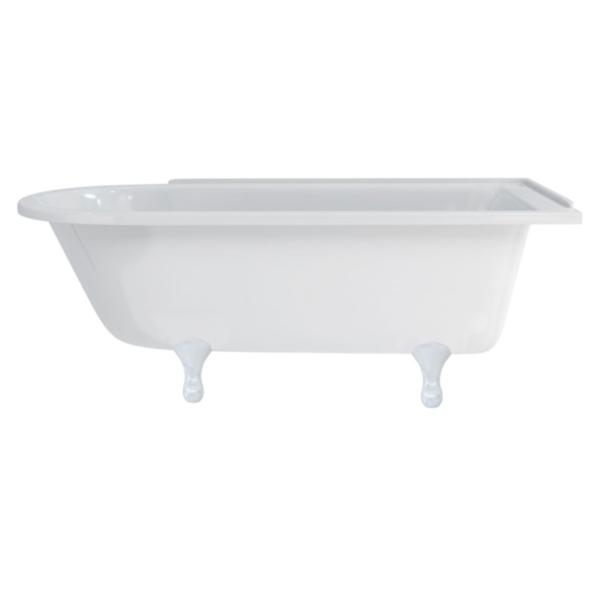
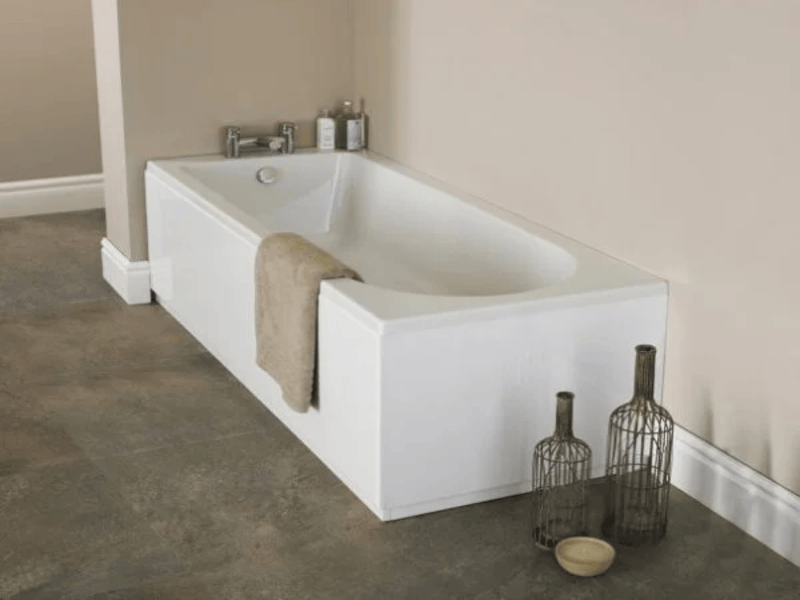
A single ended freestanding bath has one sloped end for reclining and one flat or squared end — similar in principle to a standard built-in bath but finished on the outside. The taps are typically positioned at the flat end. This design is generally the more compact of the two, making it a sensible choice for bathrooms where space is tighter or where the bath is being positioned against a wall rather than in the centre of the room.
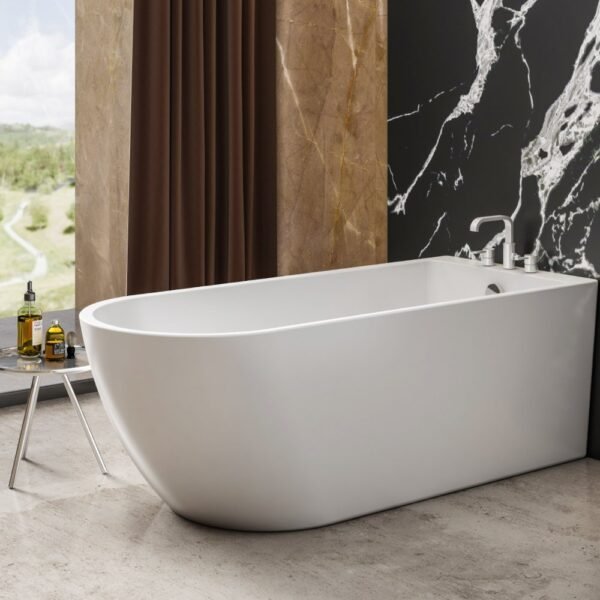
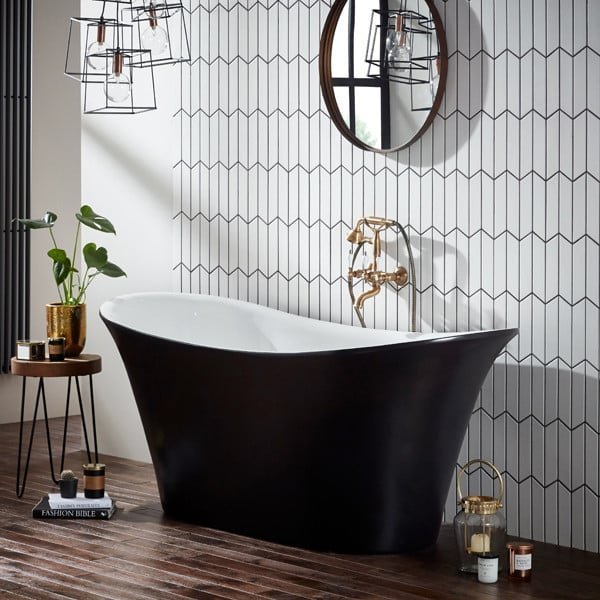
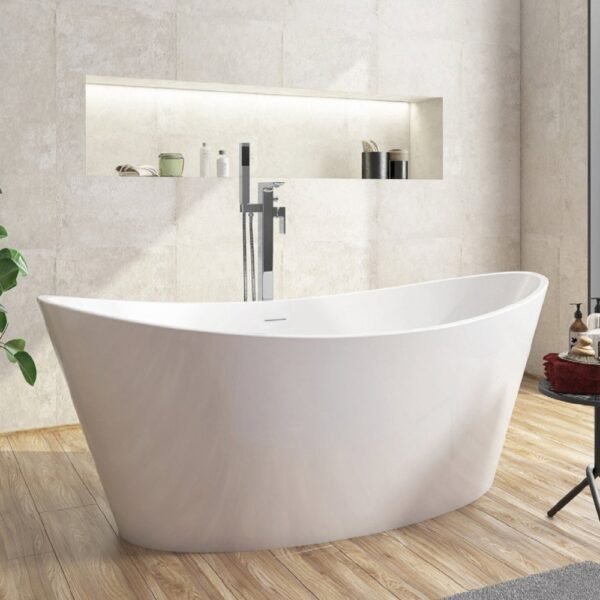
A double ended freestanding bath is symmetrical — gently sloped at both ends with taps positioned centrally on the side or through the base of the bath. This is the classic freestanding silhouette that tends to look most dramatic as a centrepiece, and it is the style most commonly associated with the freestanding aesthetic. The central tap position also means it works beautifully from both ends, which is a genuine bonus for couples who like to share a bath.
If you are genuinely undecided, think about how many people will be using the bath regularly. Single bather? Either works. Two? Double ended every time.
Can a Freestanding Bath Work in a Small Bathroom?
Genuinely yes — though it does require a bit more thought than simply dropping a large tub into the middle of a small room.
The most important consideration is size. A small freestanding bath can start at around 1400mm in length, and some compact single ended designs go even shorter than that without looking out of proportion. The key is choosing a bath that has the right visual weight for your room — something too wide or too tall can feel oppressive in a small space even if the footprint technically fits.
Positioning matters enormously too. Placing a freestanding bath in the corner of a smaller bathroom is one of the most effective space-saving moves available to you. It tucks the bath away from the main traffic area, keeps the centre of the room open, and can actually make the bathroom feel more spacious rather than less — because your eye reads the open floor space first. Positioning a compact bath under a window is another technique that works particularly well in narrow or awkward bathroom layouts, drawing the eye upward and giving the room a sense of height.
One thing worth noting for smaller bathrooms: a back-to-wall style freestanding bath — which has a flat back designed to sit flush against the wall — gives you the freestanding look with a significantly smaller floor footprint than a fully standalone centrepiece model.
What About a Freestanding Bath With a Shower?
This is probably the question we hear most often from people planning a bathroom renovation, and the honest answer is that it is very much possible — it just needs a bit more planning than a standard setup.
The most straightforward approach for a freestanding bath with a shower is a wall-mounted shower head positioned above the bath, with a bath shower screen or wraparound curtain rail to contain the water. A hinged or fixed glass shower screen attached to the bath or wall gives a far cleaner, more contemporary result than a curtain — and frameless or semi-frameless options look particularly sleek alongside modern freestanding bath designs.
If your bath is positioned away from the wall, a freestanding shower system — a floor-mounted riser with a shower head — is the more elegant solution, creating a cohesive freestanding aesthetic where both the bath and the shower hardware stand independently from the walls. It is a look more commonly seen in larger bathrooms, but the impact when it works is extraordinary.
The practical point worth flagging: a shower over a freestanding bath does require adequate water containment, so think carefully about the floor surface around the bath and ensure the waste and drainage are positioned to cope with shower-volume water flow.
Traditional vs Contemporary — Finding Your Style
The shape and style of the bath itself sets the tone for the entire bathroom, so it is worth spending some time here before making a final decision.
Traditional freestanding baths — roll-top designs, slipper baths, and baths on ball-and-claw feet — bring an unmistakeable sense of period elegance to a bathroom. They work beautifully alongside brass or nickel brassware, metro tiles, and tongue and groove panelling. If your home has any period character to it, a roll-top or slipper bath can feel like the most natural thing in the world — as though the room was designed specifically around it.
Contemporary freestanding baths lean toward clean geometric lines, smooth rounded profiles, and minimal hardware. They suit modern bathroom schemes — large format tiles, matt black or brushed brass fittings, walk-in shower screens, and a general sense of intentional restraint. The double ended oval bath is probably the most widely loved shape in this category right now, and it is easy to see why — it manages to feel both modern and timeless at the same time.
Neither is inherently better than the other. It comes down to your home, your personal taste, and how the bath sits within the wider bathroom design you are creating.
Building a Freestanding Bath Suite
One thing that trips people up when planning around a freestanding bath is how to build the rest of the bathroom suite around it. The bath tends to set the design direction — and once you know which style and finish you are working with, the other decisions become significantly cleaner.
A freestanding bath suite typically pairs the bath with coordinating sanitaryware — a toilet, basin, and bathroom furniture — in finishes and styles that complement the bath rather than compete with it. For a traditional roll-top bath, a high-level WC and a pedestal basin feel architecturally appropriate. For a sleek modern double ended bath, a wall-hung toilet and countertop basin create the clean visual language the bath calls for.
The brassware is equally important. Floor-mounted freestanding bath taps are the most dramatic choice and are particularly associated with traditional and luxury bathroom aesthetics. Wall-mounted taps work beautifully with baths positioned against a wall. Deck-mounted options sit on the rim of the bath itself and suit a wide range of bath styles. Whichever you choose, keeping the tap finish consistent with the rest of the bathroom hardware — towel rails, shower fittings, cabinet handles — is what ties the whole scheme together.
A Few Things Worth Knowing Before You Buy
Before falling completely in love with a particular bath, it is worth checking a couple of practical points. Acrylic freestanding baths are the most widely available and most budget-accessible option — lightweight, warm to the touch, and available in the widest range of shapes and sizes. Stone resin baths are heavier and more substantial, retaining heat particularly well and feeling genuinely premium underfoot. Cast iron and stone baths are the most weighty of all — beautiful and incredibly durable, but definitely worth checking your floor’s structural capacity for before ordering.
Access for plumbing is the other practical consideration. Because a freestanding bath sits away from the wall, the waste and supply pipes need to either come up through the floor or run from the wall concealed beneath the bath. This is rarely a problem but is worth discussing with your plumber at the planning stage rather than after the floor is finished.
Ready to explore what’s available? Take a look at the full range of freestanding baths — from compact single ended options to dramatic double ended centrepieces and everything in between.